AI and Cybersecurity Risks Ethics & Laws for SMEs

- Description
- Curriculum
- Reviews
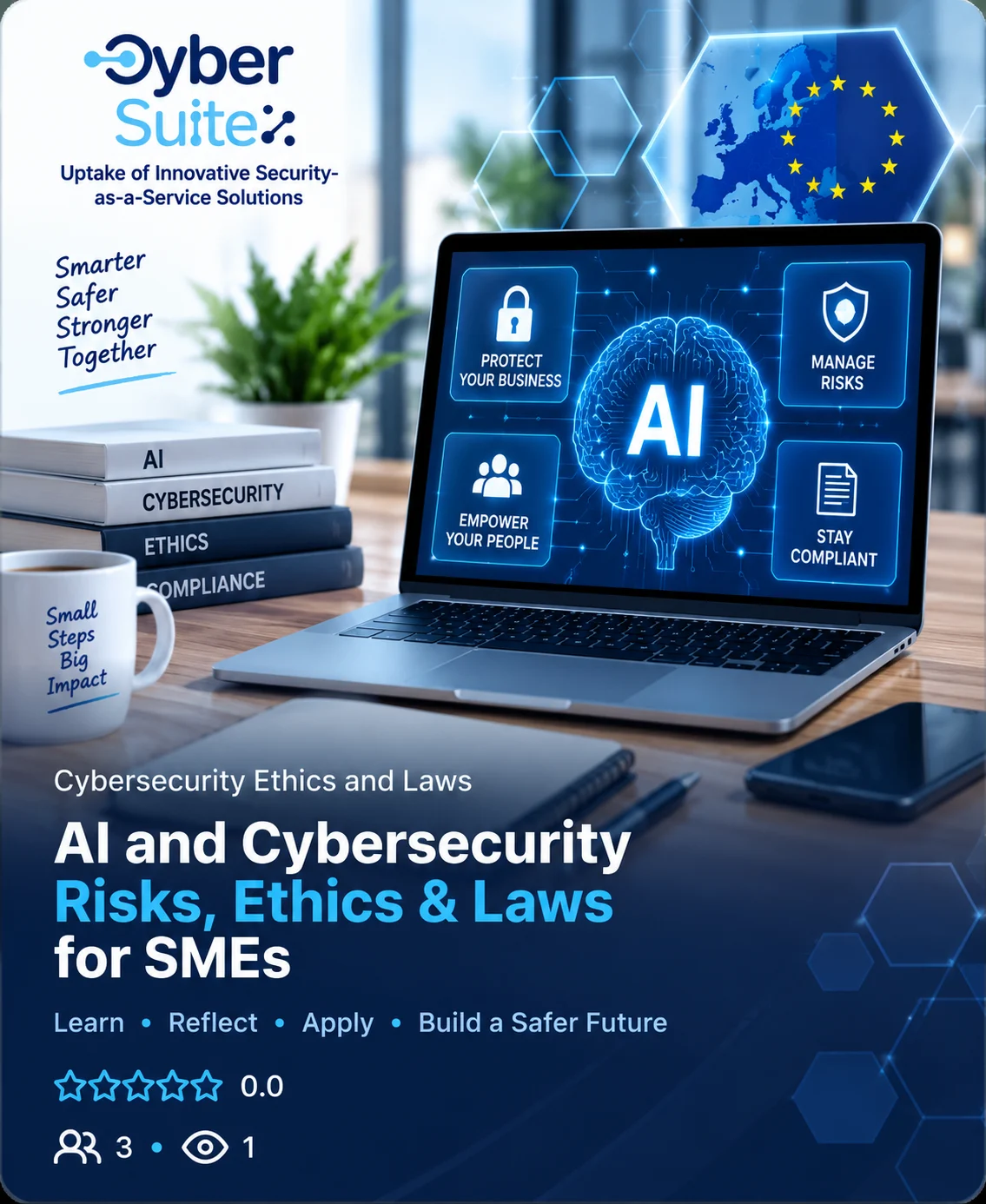
AI and Cybersecurity Risks, Ethics & Laws for SMEs is a practical, easy-to-follow course designed to help SME employees understand the cybersecurity risks, ethical considerations and legal responsibilities associated with the growing use of Artificial Intelligence (AI).
Through relatable examples, real-life scenarios and simple practical checks, participants learn how AI is changing the cyber threat landscape, how to recognise AI-powered phishing, scams, deepfakes and digital impersonation, and how to use AI tools safely and responsibly in their everyday work.
The course focuses on practical understanding rather than technical or legal expertise. Learners explore how to protect personal, confidential and business information when using AI, recognise potential bias and inaccurate AI-generated information, maintain appropriate human oversight, and make responsible decisions when using AI-assisted tools.
The course also introduces the key cybersecurity and AI rules relevant to SMEs, including data protection and GDPR principles, NIS2 and the EU AI Act, helping employees understand how these requirements relate to their everyday responsibilities.
By the end of the course, participants will be better equipped to recognise AI-related cyber threats, use AI tools responsibly, protect sensitive information, make informed and ethical decisions, and contribute to a safer, more responsible and compliant use of AI within their organisation.
Learning Objectives
By the end of the AI and Cybersecurity Risks, Ethics & Laws for SMEs course, learners will be able to:
- Recognise AI-powered cybersecurity threats, including AI-generated phishing, scams, social engineering, deepfakes, voice cloning and digital impersonation.
- Understand how AI is changing the cyber threat landscape and why AI-enabled attacks may be more convincing, personalised and difficult to recognise.
- Use AI tools safely and responsibly at work by understanding their benefits, limitations and potential risks and following organisational policies and procedures.
- Protect personal, confidential and business information when interacting with AI tools and make safer decisions about what information should or should not be shared.
- Recognise potential bias, inaccuracies and misleading AI outputs and apply critical thinking rather than automatically trusting AI-generated recommendations.
- Maintain appropriate human oversight and responsibility when AI is used to support important workplace decisions.
- Understand key data protection and cybersecurity responsibilities, including practical principles related to GDPR, NIS2 and cybersecurity incident reporting.
- Understand the practical implications of the EU AI Act, including the importance of transparency, AI literacy, responsible AI use and different levels of AI risk.
- Recognise individual and organisational responsibilities when using AI and know when to seek guidance or report concerns.
Overall objective: Help SME employees develop the practical knowledge and awareness needed to recognise AI-related risks, use AI safely and ethically, protect people and business information, and contribute to responsible and compliant AI use in their everyday work.
-
2
 1.1 AI and the Changing Cyber Threat Landscape
Learn how AI is changing the cybersecurity landscape, how cybercriminals can use AI to make attacks faster and more convincing, and what these emerging threats mean for SMEs.
-
3
1.2 AI-Generated Phishing, Scams and Social Engineering
Learn how AI can make phishing, scams and social engineering more realistic and personalised, and how to recognise suspicious messages and verify unexpected requests before taking action.
-
4
1.3 Deepfakes, Voice Cloning and Digital Impersonation
Learn how deepfakes, voice cloning and AI-generated content can be used to impersonate trusted people, deceive employees and create new risks for SMEs.
-
5
 Module 1 Quiz — AI-Powered Cybercrime
-
6
2.1 Using AI Responsibly at Work
Learn how to use AI tools safely and responsibly at work, understand their benefits and risks, and follow your organisation’s rules when using AI for everyday business tasks.
-
7
2.2 Privacy, Data and Confidential Information in AI
Learn how to protect personal, confidential and business information when using AI tools, understand what can happen to data you provide, and make safer decisions before sharing information with AI.
-
8
2.3 Bias, Transparency and Human Responsibility
Learn why AI can produce inaccurate or biased results, where bias can come from, and why transparency, critical thinking and human oversight remain essential when using AI.
-
9
Module 2 Quiz — Responsible and Ethical AI
-
10
3.1 Data Protection, Privacy and GDPR Basics
Learn the essentials of personal data protection and privacy, understand why SMEs must protect the information they handle, and recognise your everyday responsibilities under data protection rules.
-
11
3.2 Cybersecurity Rules and the EU Legal Landscape
Learn how EU cybersecurity rules affect organisations, understand the practical relevance of NIS2, and recognise the growing responsibilities of SMEs, management, employees and suppliers.
-
12
3.3 AI Rules, Cybercrime and Your Responsibilities
Learn the practical basics of the EU AI Act, understand that different AI uses carry different levels of risk, and recognise your responsibilities for using AI legally, ethically and securely.
-
13
Module 3 Quiz — Laws, Responsibilities and AI